

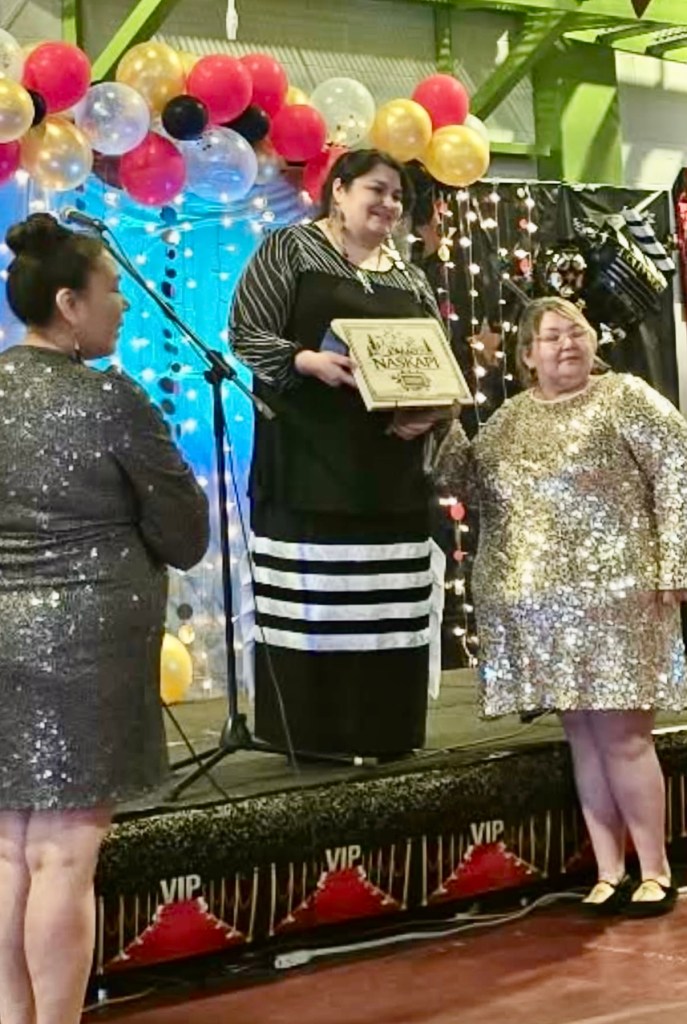
Chief Louise Nattawappio gave the opening address at the Miiuwapen Ishkauch Gala, an afternoon to celebrate women. She spoke about four things: the harm gossip can cause, the anxiety many women and girls live with, the importance of self-care, and the power of kindness between women.
Many people asked to read her speech, so we are sharing it here in full.
Chief Nattawappio’s speech
Good evening, ladies,
It’s a pleasure to be here tonight to celebrate women: our strength, our courage, and the many ways we make our communities better.
As Chief, I was asked to address some of the challenges facing our community and what we can do to support one another. I want to focus on four things: the harm gossip can cause, the anxiety many women and girls experience, the importance of self-care, and the power of kindness between women.
First, gossip may seem like harmless conversation, but it can leave a lasting wound. A rumour, a cruel comment, or a private story shared without permission can make someone feel ashamed, isolated, or unsafe. When gossip follows someone to work, school, or other parts of the community, it can damage her confidence and relationships. And for someone who has already faced hardship, those words may bring back painful feelings. We don’t always know what another person is carrying, so it’s worth pausing before we speak.
We can choose a better path. When we hear gossip, we don’t have to pass it along. We can change the subject, speak up with kindness, or check in with the person being discussed. And if we’ve caused harm, we can take responsibility, apologize, and do better. Our words have power. Let’s use them to support one another, not tear one another down.
Another challenge many women and girls face is anxiety. Work, family responsibilities, financial worries, social pressures, and the constant stream of news and messages can make it hard to switch off. Anxiety can leave us feeling tense, overwhelmed, or unable to focus. These feelings should not be dismissed or treated as a personal failure. Asking for support is a sign of strength.
That’s where self-care matters. Self-care can’t solve every problem, and it isn’t a substitute for professional help when that’s needed. But small, regular choices can help us cope: taking a few slow breaths, getting some rest, going for a walk, spending time with someone we trust, or stepping away from our screens. Setting boundaries and asking others to share the load can also protect our well-being. Self-care is not selfish, and it’s not something we have to earn. We deserve care even when our work is unfinished.
We can also care for one another through lateral kindness: the kindness we show to the people beside us, especially other women. We don’t have to compete for respect, success, or opportunity. There is room for many voices and many kinds of leadership. We can celebrate another woman’s achievements, share advice, recommend one another for opportunities, and listen without judging.
Empowerment isn’t only about standing strong on our own. It’s also about helping others find their strength. Sometimes that means mentoring someone or making space for a quieter voice. Sometimes it’s as simple as saying, “I believe in you.” When women support women, we make it easier for everyone to grow.
Tonight, let’s leave with a simple promise: speak with care, choose kindness, lift other women up, and make space to care for ourselves. By doing these things, we can help create a community where women feel safer, stronger, and better able to face life’s challenges. Not alone, but together.
Thank you.